
Europe’s energy system is undergoing one of the most dramatic transformations in decades. As the continent attempts to end its dependence on Russian natural gas, a country once considered peripheral to Europe’s energy network is now stepping into the spotlight. Greece is positioning itself as both a gateway for imported gas and a potential producer in its own right.
The shift began after the Russian invasion of Ukraine triggered an energy shock across Europe. Before the war, Russia supplied roughly 40 percent of the European Union’s natural gas. By 2024 that share had fallen to around 11 percent as European governments rushed to diversify supply and reduce their dependence on Moscow. Liquefied natural gas imports have filled much of this gap, particularly shipments from the United States, which now account for nearly 60 percent of the EU’s LNG imports.
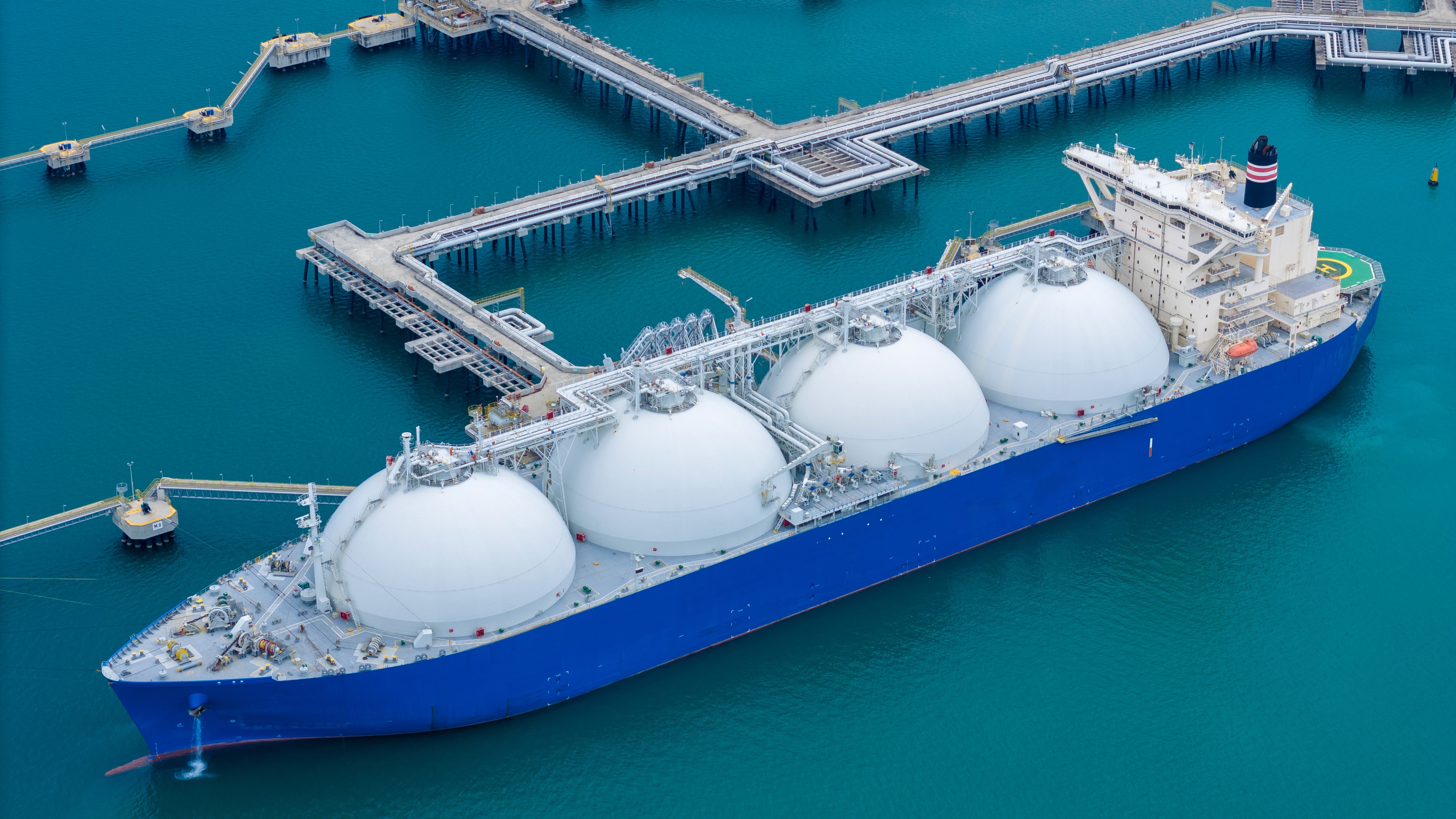
Greece has moved quickly to take advantage of this shift. Its liquefied natural gas terminal at Revithoussa, near Athens, has expanded its capacity and now plays a key role in receiving LNG shipments destined for southeastern Europe. Gas arriving at the facility can then be transported north through a developing network of pipelines often referred to as the Vertical Gas Corridor, linking Greece with Bulgaria, Romania, Moldova and Ukraine. The system effectively reverses the traditional direction of European gas flows, allowing energy arriving from the Mediterranean to reach countries that once relied heavily on Russian pipelines.
Demand for these routes is already growing. LNG imports into Greece have increased sharply in recent years, with the United States supplying the majority of shipments. Many unloading slots at the Revithoussa terminal are already reserved years in advance, reflecting expectations that LNG will remain a key component of Europe’s energy mix as the European Union prepares to phase out Russian gas entirely by 2027.
At the same time, Greece is exploring the possibility that its own waters may contain significant hydrocarbon reserves. In early 2026 the Greek government signed exploration agreements with a consortium led by Chevron to search for natural gas in offshore areas south of the Peloponnese and near Crete. The concessions cover several large maritime blocks and represent the country’s most significant exploration effort in more than forty years. If approved by parliament, geophysical surveys are expected to begin later in 2026.
The deal follows a similar exploration partnership with ExxonMobil announced in 2025, highlighting growing energy cooperation between Greece and the United States. Some analysts believe potential hydrocarbon reserves in the region could generate substantial economic benefits if commercially viable deposits are discovered.
Yet Greece’s energy ambitions are not without controversy. Environmental organizations such as Greenpeace and World Wide Fund for Nature argue that expanding fossil fuel exploration risks undermining Europe’s climate commitments and delaying investment in renewable energy. Others warn that LNG imports, which are typically more expensive than traditional pipeline gas, could expose Europe to volatile global energy prices.
Geopolitical tensions add further complexity. Offshore exploration in the eastern Mediterranean has long been sensitive, particularly given maritime disputes with Turkey. As a result, energy development in Greek waters could have implications not only for economic policy but also for regional diplomacy.
Whether Greece ultimately becomes a major energy producer remains uncertain. What is clear, however, is that the country is attempting to reposition itself at a moment when Europe’s energy system is being fundamentally reshaped. If successful, Athens could move from the periphery of Europe’s energy market to one of its most strategic crossroads.